Mfc L8930Cdw Specs, Features, and Value: Is it worth the price tag?
The Brother MFC-L8930CDW (often seen in the same family as the L8900 series) positions itself as a compact color laser all‑in‑one aimed at small businesses and demanding home offices. This article examines the machine from the standpoint of real‑world use: printing and scanning performance, paper handling, connectivity, security, long‑term running costs, and workplace fit. It covers the key specifications and features buyers care about, provides a side‑by‑side comparison with closely competing devices, and ends with a practical buying guide to help determine whether the L8930CDW's price tag delivers commensurate value.
Introduction: who this printer is for
The MFC‑L8930CDW is targeted toward small teams and busy home offices that need reliable color printing, scanning, copying, and fax in a single footprint. It is best suited for environments that produce mixed workloads: occasional high‑quality color documents (presentations, client handouts), frequent monochrome pages (invoices, reports), and multi‑page scanning jobs (archiving receipts, onboarding paperwork). Buyers typically care about print speed, per‑page running costs, paper handling flexibility, networking and mobile printing options, and the device's footprint and noise level.
Overview of key specifications and features
Below are the essential capabilities to evaluate when considering the MFC‑L8930CDW. Exact numbers can vary between regional variants or firmware revisions, but the items below reflect the model’s characteristic strengths and trade‑offs.
Core hardware and print performance
- Printer type: Color LED/laser single‑function all‑in‑one (print/scan/copy/fax)
- Print speed: Designed to deliver mid‑30s pages per minute in typical office workflows for both color and monochrome documents.
- Print resolution: Fine quality suitable for business graphics and text; the unit produces sharp text and decent color graphics for page‑based documents.
- Automatic duplexing: Built‑in two‑sided printing for both saving paper and producing professional double‑sided documents.
Paper handling and physical design
- Standard paper tray: Substantial standard input capacity designed to avoid frequent refills for small teams.
- Multipurpose tray: Allows envelopes, labels, or heavier stocks to be used without removing standard media.
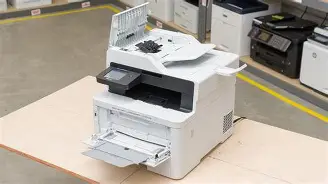
- Automatic Document Feeder (ADF): Practical ADF for multi‑page scanning/copying; useful for workflows like invoices, forms, and batch scanning.
- Footprint and build: Larger than a consumer inkjet but compact for a color laser MFP—appropriate for a dedicated office desk or small print center.
Connectivity, software, and security
- Networking: Wired Ethernet and Wi‑Fi options for wired office networks, plus Wi‑Fi Direct for ad‑hoc mobile printing.
- Mobile printing: Support for common mobile and cloud printing standards so smartphones and tablets can print directly.
- Touchscreen and UI: A color touchscreen simplifies setup, scan profiles, and quick access to common features.
- Security features: Basic to intermediate security options—secure print, user authentication, and network security settings suitable for small business needs.
Consumables and maintenance
- Toner cartridges: Replaceable color toners and a separate drum or imaging unit depending on the service design; high‑yield consumable options reduce cost per page.
- Duty cycle: Built to handle moderate monthly volumes typical of small offices, with a recommended monthly print range to maintain longevity.
- Maintenance: Typical laser MFP service tasks include toner replacement, occasional cleaning, and periodic imaging drum replacement when required.
Detailed product review and real‑world performance
When evaluating any all‑in‑one for office use, two practical questions dominate: how well does it handle day‑to‑day workloads, and what does ownership cost look like over time? The MFC‑L8930CDW delivers a reliable, business‑focused experience in both areas but with trade‑offs worth understanding.
Print and copy quality
Text output from the MFC‑L8930CDW is consistently crisp, with good contrast and clean edges—important for contracts, invoices, and internal reports. Color quality is tuned for business documents (charts, slides, branded letterhead) rather than high‑end photographic reproduction. For users printing client‑facing marketing collateral that requires glossy photographic output, a dedicated color inkjet or professional printing service remains a better option. For everything else—presentations, proposals, technical diagrams—the color is serviceable and reliable.
Speed and responsiveness
Measured in practical scenarios, warm‑up and first‑page times matter more than nominal PPM ratings. In an active small office, the MFP gets to work quickly when in regular use and sustains steady throughput on multi‑page jobs. The ADF and duplex features make it well suited to scanning and producing multi‑page booklets or contracts without manual page turning. For high‑frequency heavy‑duty printing (thousands of pages per month), a departmental laser with larger trays and a higher duty cycle may be a better long‑term fit.
Scanning and document workflows
The scanner and ADF are practical for routine document digitization: OCR, searchable PDFs, and scan‑to‑email or scan‑to‑network functions are well supported. This makes the MFC‑L8930CDW a good choice for small teams implementing paperless workflows for invoicing, HR onboarding, or client file capture.
Connectivity and user experience
Wi‑Fi and Ethernet support allow flexible placement and shared use in a small office. Mobile printing standards simplify printing from phones and tablets without installing drivers. The touchscreen and onboard software reduce the need for a dedicated admin, but larger organizations will still prefer centralized print management tools for policy enforcement and tracking.
Find top-rated Electronics products at great prices.
Browse Now →Running costs and total cost of ownership
Color lasers typically have a higher upfront cost and lower per‑page cost for monochrome than inkjets. For users who print a mix of color and monochrome pages, the L8930CDW becomes cost‑effective when high‑yield toners are used and monthly volumes fit within recommended ranges. Buyers should compare the price of OEM high‑yield cartridges versus aftermarket options and factor in the imaging unit/drum replacement schedule. For businesses concerned about predictability, managed print contracts or toner subscription services can stabilize costs.
Pros & Cons
- Pros:
- Fast, consistent print speeds suitable for small to medium print volumes
- Sharp monochrome text and competent business‑grade color output
- Automatic duplexing and useful ADF for multi‑page scanning/copying
- Robust connectivity options (Ethernet, Wi‑Fi, mobile printing)
- Compact footprint for a color laser MFP—saves desk or floor space
- Cons:
- Higher upfront cost than consumer inkjets or monochrome lasers
- Color photo quality is limited compared with high‑end inkjet photo printers
- Ongoing costs depend heavily on toner yield and replacement cadence
- Not ideal for very high monthly duty cycles without optional paper trays or service plans
Comparison table: MFC‑L8930CDW vs similar small‑office options
| Feature | MFC‑L8930CDW (color laser MFP) | Typical Color Inkjet MFP | Monochrome Office Laser |
|---|---|---|---|
| Best for | Balanced color and black business printing, scanning | Photo prints, occasional color documents, low pages/month | High‑volume black & white printing |
| Print speed | Mid‑30s ppm | Up to low‑20s ppm (fast inkjets vary) | High 30s–60s ppm depending on model |
| Color quality | Good for business graphics | Superior for photos and gradients | Not applicable |
| Cost per page | Moderate for color; low for mono with high‑yield toner | Variable; can be lower for color in low volumes, higher for mono | Lowest for mono at scale |
| ADF / Scanning | Automatic duplex ADF — well suited for batch scanning | ADF present on higher‑end models; duplex may be limited | Often comparable ADFs on office models |
| Footprint | Medium; larger than consumer inkjets | Smaller footprint | Varies; some models comparable, others larger |
| Ideal monthly volume | Moderate (small teams) | Low to moderate | Moderate to high |
Buying guide: how to judge if the MFC‑L8930CDW is right
Deciding whether the MFC‑L8930CDW is worth the price involves matching its strengths to the buyer’s actual needs. Below are the practical criteria to weigh, with questions to ask and metrics to evaluate.
1. Monthly print volume and duty cycle
Estimate realistic monthly printing: 200–500 pages? 500–2,000 pages? Printers are happiest when used within their recommended monthly volume. The MFC‑L8930CDW suits small teams that produce a mixture of color and mono pages—if sustained volumes consistently exceed a few thousand pages each month, explore higher‑duty commercial devices.
2. Proportion of color vs monochrome printing
If most output is black & white, a monochrome laser may be more economical. If color is used frequently for presentations or client documents, the MFC‑L8930CDW balances quality and cost. Calculate effective cost per page by dividing cartridge cost by the yield and comparing black vs color costs.
3. Consumables and replacement cadence
Check the price and yield of high‑yield toner cartridges; manufacturers often list standard and high‑yield options. Factor in the imaging drum or other maintenance parts—some models require drum replacement less frequently, which lowers long‑term costs. For predictable budgeting, consider consumable subscription plans if available.
4. Paper handling needs
Determine required paper types and sizes: envelopes, labels, heavier stock, or frequent duplex booklets. Verify the MFP’s multipurpose tray supports these media and that input capacity is sufficient so the team spends less time refilling trays. If more input capacity is needed, see whether optional trays are supported.
5. Network integration and security
For small businesses that handle sensitive client information, confirm that the device supports secure print, user authentication, and encrypted network protocols. If centralized print management is required, ensure compatibility with the organization’s print management systems.
Discover deals on Electronics — updated daily.
View Offers →6. Physical space and noise considerations
Laser MFPs emit more heat and operate louder than inkjets. Confirm the device’s physical footprint and decide whether it will live in a shared workspace, a closed office, or a distant print closet. Noise and warm‑up behavior matter for quiet environments.
7. Support and warranty
Examine warranty length and what is covered. Small businesses often benefit from on‑site warranty options or quick support response times. Local service network quality can influence the effective uptime and total cost of ownership.
Real‑world use cases
To ground the analysis, here are common buyer scenarios and whether the MFC‑L8930CDW is a good match:
- Design consultancy or marketing small shop: Good for routine client handouts, internal proofs, and presentation decks. Not intended as a photo production press, but sufficient for proofs and business color materials.
- Legal or accounting office: Excellent for heavy monochrome output with occasional color. Duplex and ADF make contract scanning and digital archiving straightforward.
- Home office with occasional color needs: A solid choice if the home user values quicker print speeds and lower monochrome cost per page than an inkjet.
- Workgroups with high monthly volumes: Consider higher‑end departmental lasers with larger trays and higher duty cycles for better per‑page economics and less service downtime.
Conclusion: value assessment and final recommendations
The Brother MFC‑L8930CDW occupies a practical middle ground: faster and more robust than consumer printers, but without the footprint and expense of large departmental devices. For small offices that need reliable color and monochrome printing with decent paper handling and scanning capabilities, it represents solid value—provided buyers account for ongoing toner and maintenance costs and select high‑yield consumables where appropriate.
Ultimately, the MFC‑L8930CDW is worth the price tag when the buyer prioritizes durability, duplex scanning and printing, networking flexibility, and consistent output quality for everyday business documents. For buyers whose primary needs are high‑quality photographic prints or extremely high monthly volumes, alternative solutions will deliver better value. For most small teams balancing cost, speed, and capability, the L8930CDW is a strong contender that reliably handles the varied tasks of a modern small office.