I Switched to the Sigma 12mm f/1.4 DC DN Contemporary and Here is What Happened
The landscape of wide-angle photography for APS-C mirrorless systems has undergone a radical transformation over the last several years. For a long time, crop-sensor users were left wanting when it came to ultra-wide primes that offered both a fast aperture and professional-grade sharpness without the massive size and price tag of full-frame glass. The introduction of the Sigma 12mm f/1.4 DC DN Contemporary has sought to bridge this gap, offering a unique focal length that translates to an 18mm equivalent on full-frame systems. Switching from a standard kit zoom or even a slower wide-angle prime to this specific piece of glass represents a significant shift in how a photographer approaches composition, low-light environments, and depth of field in tight spaces.
When a photographer decides to integrate the Sigma 12mm f/1.4 into their workflow, they are often looking for more than just a wider field of view. They are looking for the ability to tell a story with a sense of immersion. In the "Cameras" category, few lenses have generated as much conversation regarding the balance of price, performance, and portability. This transition fundamentally changes the technical constraints of a shoot, particularly for those focused on architectural photography, astrophotography, and high-end vlogging. This analysis explores the nuances of making that switch and the tangible impact it has on image quality and creative possibilities.
Detailed Product Analysis: The Engineering Behind the glass
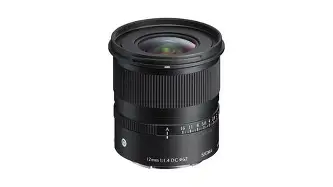
The Sigma 12mm f/1.4 DC DN Contemporary is part of Sigma’s highly regarded "Global Vision" series, specifically the Contemporary line. While the "Art" line is often associated with no-compromise optics at the expense of weight, the Contemporary line aims to balance size and performance. However, with the 12mm f/1.4, Sigma has pushed the boundaries of what a Contemporary lens can achieve, delivering optical performance that rivals many Art-series lenses. The focal length of 12mm provides a 99.1-degree angle of view, making it wide enough to capture expansive vistas while remaining narrow enough to avoid the extreme edge distortion seen in 10mm or fisheye lenses.
The most striking feature encountered upon switching to this lens is the f/1.4 maximum aperture. In the world of ultra-wide APS-C lenses, f/2.8 was long considered the standard for "fast." Jumping to f/1.4 provides two full stops more light than an f/2.8 lens and four full stops more than a typical kit lens at its widest end. This massive influx of light allows for significantly lower ISO settings in dim interiors or under the night sky. For the astrophotographer, this means capturing the Milky Way with shorter exposure times, which prevents star trailing and results in pin-sharp celestial points. For the interior photographer, it means Handheld shooting is suddenly viable in museums or cathedrals where tripods are often prohibited.
Optically, the lens is comprised of 15 elements in 12 groups, including two FLD (F-type Low Dispersion) elements, one SLD (Special Low Dispersion) element, and two aspherical elements. This complex arrangement is designed to combat the common pitfalls of wide-angle glass: chromatic aberration and sagittal coma flare. During testing in real-world environments, such as high-contrast architectural scenes with sunlight hitting metallic edges, the lens maintains incredible control over color fringing. Furthermore, the use of a stepping motor ensures that the autofocus is not only fast but strikingly silent, which is a critical factor for hybrid shooters who utilize their cameras for both stills and video content.
The Real-World Impact on Image Quality
Switching to the Sigma 12mm f/1.4 reveals a level of center sharpness that is immediately apparent even when shooting wide open at f/1.4. In many wide-angle lenses, the corners suffer from extreme softness or "smearing," but Sigma has managed to maintain a high degree of resolution across the frame. While some vignetting is present at f/1.4, as is common with fast primes, it is easily corrected in post-processing and often adds a pleasing natural frame to the subject. The bokeh produced by this lens is also surprisingly smooth for an ultra-wide. While 12mm isn't traditionally used for shallow depth of field, the f/1.4 aperture allows for subject separation if you get close enough to your foreground element, creating a three-dimensional pop that is rare in wide-angle photography.
The build quality is another area where the switch feels like an upgrade. The lens features a dust- and splash-resistant structure with a rubber seal at the mount. The barrel is constructed from Thermally Stable Composite (TSC), which has an expansion rate similar to aluminum, ensuring consistent performance in varying temperatures. The manual focus ring is well-damped, providing enough resistance for precise adjustments, which is particularly useful for manual focus pulling in video or focusing on infinity during night shoots.
Pros and Cons of the Transition
- Ultra-Fast f/1.4 Aperture: Provides unmatched low-light performance for an APS-C ultra-wide lens, enabling lower ISO and cleaner images.
- Exceptional Sharpness: Delivers high-resolution results from the center to the edges, even when used wide open.
- Compact and Durable Build: Despite the fast aperture, the lens remains manageable in size and features weather sealing at the mount for outdoor reliability.
- Minimized Distortion: Straight lines remain remarkably straight for such a wide focal length, reducing the need for heavy digital correction.
- Advanced Autofocus: The stepping motor is quick, accurate, and near-silent, making it ideal for both street photography and video applications.
- Excellent Coma Control: A vital feature for astrophotography, ensuring stars in the corners of the frame remain points rather than appearing as "wings."
- Vignetting at Wide Apertures: There is noticeable light fall-off at f/1.4, though it subsides significantly by f/2.8.
- Weight Distribution: While compact for its specs, it is heavier than slower wide-angle alternatives, which can make smaller mirrorless bodies feel front-heavy.
- No Optical Stabilization: Relies entirely on the camera's In-Body Image Stabilization (IBIS). Users with older bodies without IBIS may struggle with handshake during slower shutter speeds in video.
- Filter Size: The 67mm filter thread is standard, but those moving from smaller kit lenses may need to invest in new filters.
Comparison with Leading Alternatives
To understand the value of switching to the Sigma 12mm f/1.4, it is helpful to compare it against other popular wide-angle options in the APS-C ecosystem. The following table highlights the technical differences that photographers typically weigh before making a purchase decision.
Shop the latest Cameras & Photography picks on Amazon.
Shop Amazon →| Feature | Sigma 12mm f/1.4 DC DN | Sony E 11mm f/1.8 | Samyang/Rokinon 12mm f/2.0 | Sigma 10-18mm f/2.8 DC DN |
|---|---|---|---|---|
| Max Aperture | f/1.4 | f/1.8 | f/2.0 | f/2.8 |
| Full-Frame Equiv. | 18mm | 16.5mm | 18mm | 15-27mm |
| Autofocus | Yes (Stepping Motor) | Yes (Linear Motors) | Yes (Newer version) | Yes (Stepping Motor) |
| Weather Sealing | Mount Only | Yes | No | Mount Only |
| Weight | 440g | 181g | 213g | 260g |
| Price Category | Mid-High | Mid | Budget-Mid | Mid-High |
The comparison reveals that the Sigma 12mm f/1.4 sits in a league of its own regarding light-gathering capability. While the Sony 11mm is lighter and slightly wider, it cannot match the depth of field or the low-light headroom of the f/1.4 aperture. The Samyang 12mm f/2.0 remains a popular budget choice, but it lacks the sophisticated AF and optical refinement found in the Sigma. For those who prioritize versatility, the Sigma 10-18mm zoom is an excellent alternative, but it loses two full stops of light compared to the 12mm prime.
Buying Guide: Is This Lens Right for Your System?
Deciding to switch to the Sigma 12mm f/1.4 depends largely on your primary subject matter and the specific mirrorless body you use (available for Sony E, Fujifilm X, and Leica L mounts). Before investing, consider the following buying factors that define the 12mm user experience.
1. Identifying Your Primary Use Case
If you are an astrophotographer, this lens is arguably the best value proposition on the market. The f/1.4 aperture is a game-changer for capturing the night sky with clarity and minimal noise. If you are a vlogger, the 18mm equivalent focal length is often cited as the "sweet spot" for handheld filming; it is wide enough to show your environment without the distracting "fisheye" distortion that 10mm lenses can produce. For real estate photographers, the lack of geometric distortion means less time spent fixing leaning walls in software.
2. Considering the Size and Weight
Because this lens uses a large amount of high-quality glass to achieve an f/1.4 aperture, it is physically larger than many other APS-C primes. If you use a very small camera body, such as the Sony ZV-E10 or the Fujifilm X-E4, the lens will feel substantial. You may want to consider using a grip extension to balance the setup. However, for users of mid-sized bodies like the Sony A6700 or Fujifilm X-T5, the balance is quite comfortable for all-day shooting.
3. The Need for Speed vs. Versatility
Ask yourself if you truly need f/1.4. If you primarily shoot landscapes at f/8 during the day on a tripod, you might be better served by a wide-angle zoom that gives you more framing options. The switch to the 12mm prime is specifically for those who want to master the "wide and shallow" look or those who frequently find themselves shooting in "available light" scenarios where flash is not an option.
4. Exploring the Mount Options
Sigma has thoughtfully released this lens for multiple mounts. For Fujifilm users, this provides a faster alternative to many of Fuji's own wide-angle offerings. For Sony users, it complements the existing trio of Sigma f/1.4 primes (16mm, 30mm, and 56mm), creating a complete set for professional work. Ensure you verify the mount compatibility with your specific camera body before finalizing the transition.
Impact on Creative Workflow and Composition
Adapting to a fixed 12mm focal length encourages a more deliberate style of photography. Without the crutch of a zoom ring, the photographer must move physically to frame the subject. This "zooming with your feet" often leads to more creative angles. At 12mm, foreground interest becomes vital. The Sigma 12mm f/1.4 allows you to get incredibly close to a foreground subject—thanks to its modest minimum focusing distance—while blurring the background into a soft, out-of-focus wash at f/1.4. This creates a sense of scale and depth that is difficult to replicate with longer focal lengths or slower lenses.
Discover deals on Cameras & Photography — updated daily.
See Deals →In video work, the lens offers a unique cinematic look. When used on a gimbal, the wide field of view smooths out minor movements, resulting in "dreamy" walking shots. The fast aperture also enables beautiful "b-roll" shots with blurred backgrounds, even in tight interior spaces like coffee shops or small studios. The reliability of the autofocus means you can trust the camera to track a face even at f/1.4, where the plane of focus is thin.
Technical Excellence in the Contemporary Line
Critics often question whether a "Contemporary" lens can truly hold its own against "Art" or "Professional" designated glass. The Sigma 12mm f/1.4 answers this with a resounding yes. The inclusion of high-quality aspherical elements and low-dispersion glass indicates that Sigma did not cut corners on the internal optics. The barrel construction is tight, with no wobbling parts, and the mount is made of brass for long-term durability. While it lacks some "Art" series features like a physical aperture ring (on some mounts) or an AF/MF switch, the core optical performance is what matters most to the final image.
The lens also handles flare remarkably well. When shooting into the sun, which is common in landscape and architectural work, the Super Multi-Layer Coating effectively reduces ghosting. You can still produce pleasing sunstars when stopped down to f/11 or f/16, thanks to the 9-blade rounded diaphragm, which adds a professional polished look to outdoor captures.
Conclusion
The journey of switching to the Sigma 12mm f/1.4 DC DN Contemporary is one of discovering new light and perspective. For many photographers, the transition marks the end of struggling with grainy, underexposed wide-angle shots and the beginning of a higher standard for APS-C imagery. By providing the brightness of f/1.4 at such a wide focal length, Sigma has empowered crop-sensor users with a tool that was previously the exclusive domain of expensive, heavy full-frame setups.
Ultimately, what happens when you switch to this lens is a refinement of your visual voice. You gain the confidence to shoot in the blue hour without a tripod, the ability to capture interior spaces with natural light, and the opportunity to photograph the stars with clinical precision. While it requires a bit more physical commitment due to its weight compared to plastic kit lenses, the rewards are found in every sharp, vibrant, and immersive frame. For the serious hobbyist or the working professional using an APS-C system, the Sigma 12mm f/1.4 is not just another lens; it is a transformative upgrade that redefines what is possible with a mirrorless camera.