Don't Buy Until You Read This: Nikon Z 24 70Mm F 2 8 S Ii vs Sirui Svm 145P Monopod
In the rapidly evolving landscape of professional digital photography, the distinction between a masterpiece and a missed opportunity often resides in the equipment chosen for a specific task. For enthusiasts and professionals operating within the Nikon Z ecosystem, there is perhaps no more coveted piece of glass than the standard zoom workhorse. However, as resolutions increase and video becomes an inseparable part of the workflow, the conversation has shifted. It is no longer just about the lens capturing the light; it is equally about the support system that ensures that light remains tack-sharp. This brings us to a unique crossroads where two disparate but essential pieces of gear meet: the Nikon Z 24-70mm f/2.8 S II and the Sirui SVM-145P Monopod.
At first glance, comparing a premium professional lens to a high-end modular monopod might seem like comparing apples to oranges. Yet, for the modern hybrid creator, these two tools represent two halves of a singular goal: ultimate stability and clarity. Buying one without considering the support requirements of the other is a common mistake that leads to buyer's remorse. This article dives deep into the technical specifications, real-world utility, and the symbiotic relationship between high-performance optics and rapid-deployment support systems.
The Evolution of the Workhorse: Nikon Z 24-70mm f/2.8 S II
The Nikon Z 24-70mm f/2.8 S II is the pinnacle of Nikon’s optical engineering for the mirrorless era. Replacing its predecessor was no small feat, as the original S-line 24-70mm was already widely regarded as one of the best standard zooms ever produced. The "Mark II" iteration focuses on refining what was already excellent: reducing weight, improving edge-to-edge sharpness, and virtually eliminating focus breathing for videographers. It is a lens designed for those who cannot afford to switch lenses in the heat of a wedding, a fast-paced journalistic assignment, or a high-pressure commercial shoot.
What makes this lens stand out is the inclusion of the Multi-Focus System. By using two separate AF drive units that move in perfect synchronization, Nikon has achieved a level of autofocus speed and accuracy that was previously unthinkable in a zoom lens. This system also minimizes aberrations even at close focusing distances, making it a surprisingly capable tool for detailed environmental portraits. Optically, the lens utilizes specialized elements, including Extra-low Dispersion (ED) and Aspherical glass, treated with Nano Crystal and ARNEO coats to suppress flare and ghosting. For the buyer, this means consistent performance even when shooting directly into the sun or under harsh stadium lights.
Physical Design and Ergonomics
The physical footprint of the Z 24-70mm f/2.8 S II is a testament to the advantages of the Z-mount’s short flange distance. It is significantly lighter and more compact than its F-mount ancestors, yet it feels incredibly robust. The lens features an OLED information panel that can display aperture, focal distance, or depth of field, providing a quick reference for the photographer in low-light environments. Furthermore, the customizable control ring allows for silent adjustments to ISO or exposure compensation, a feature that video shooters find indispensable. However, despite its lightweight design relative to its power, it remains a dense piece of equipment. When mounted on a Nikon Z9 or Z8, the total weight can become a factor during long production days, which leads us directly to the necessity of a high-quality support system.

The Support Revolution: Sirui SVM-145P Monopod
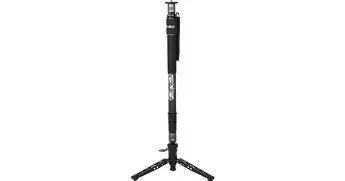
While the Nikon lens captures the image, the Sirui SVM-145P Monopod ensures the integrity of that capture. Monopods have traditionally been seen as the "middle child" of camera support—not as stable as a tripod, but more helpful than shooting handheld. The Sirui SVM-145P (Rapid System) flips this narrative by introducing a modular, quick-connect system designed for the speed of modern workflows. Built from high-strength carbon fiber, it offers the rigidity required for heavy professional kits while remaining light enough for travel.
The standout feature of the SVM-145P is the "One-Step" height adjustment and the modular feet. Unlike traditional monopods that require fiddling with multiple leg locks, the SVM system allows the photographer to deploy and adjust the height almost instantly. This is critical for sports photographers and event shooters who need to move through a crowd or change perspectives in seconds. Additionally, the base features a liquid-smooth ball head mechanism that allows for panning and tilting, effectively giving the user some of the benefits of a video head without the bulk.
Stability Meets Portability
The SVM-145P is not just a pole; it is a stabilization platform. The feet at the base can be locked for rigid support or allowed to tilt for dynamic tracking shots. For a photographer using the Nikon Z 24-70mm f/2.8 S II, this monopod becomes a force multiplier. While the lens has excellent internal autofocus, it does not have optical Vibration Reduction (VR), relying instead on the camera's In-Body Image Stabilization (IBIS). When shooting at the 70mm end in low light, the SVM-145P provides that extra stop or two of physical stability that IBIS alone might struggle to provide, particularly during long exposures or video pans.
Detailed Product Comparison and Analysis
To understand why these two products are often discussed together in professional circles, we must look at how they interact during a typical shoot. A photographer shooting a high-end gala or an indoor sporting event needs the f/2.8 aperture of the Nikon lens to keep shutter speeds high, but they also need the Sirui monopod to take the weight off their wrists and provide a pivot point for smooth tracking.
Shop the latest Cameras & Photography picks on Amazon.
See Deals →The Nikon Z 24-70mm f/2.8 S II is an investment in image quality. Every dollar spent on this lens goes into the glass, the coatings, and the autofocus motors. It is the lens you buy when you want your images to look "expensive"—with creamy bokeh, zero distortion, and clinical sharpness. On the other hand, the Sirui SVM-145P is an investment in workflow efficiency. It is what you buy when you realize that your back hurts after four hours of shooting and your hand-held video footage is just a little too shaky for a professional delivery.
Pros and Cons: Nikon Z 24-70mm f/2.8 S II
- Pro: Unmatched edge-to-edge sharpness even at f/2.8, making it suitable for high-resolution sensors like the 45.7MP found in the Z8 and Z9.
- Pro: Significant reduction in focus breathing compared to the previous generation, a major win for specialized video production.
- Pro: Customizable OLED display and control ring provide a high degree of tactile feedback and efficiency.
- Pro: Weather-sealed construction allows for confident use in rain, dust, and coastal environments.
- Con: The lack of built-in optical VR means it relies entirely on the camera's sensor-shift stabilization.
- Con: High entry price point makes it a significant financial commitment for non-professionals.
Pros and Cons: Sirui SVM-145P Monopod
- Pro: Rapid-deployment system is genuinely faster than almost any other monopod on the market.
- Pro: Carbon fiber construction provides an excellent strength-to-weight ratio.
- Pro: Extremely versatile modular design—the base can be removed and used as a tabletop tripod.
- Pro: The fluid base allows for smooth 360-degree panning, perfect for hybrid shooters.
- Con: The footprint of the base feet can be a tripping hazard in very tight, crowded spaces.
- Con: While light, it is still an extra piece of gear to carry, which may deter those aiming for a "minimalist" setup.
The Comparison Matrix: Optics vs. Support
The following table illustrates the technical divergence between these two essential tools. While they serve different functions, their "Performance Rating" reflects how well they achieve their specific design goals within a professional environment.
| Feature / Specification | Nikon Z 24-70mm f/2.8 S II | Sirui SVM-145P Monopod |
|---|---|---|
| Primary Function | Optical Image Capture | Physical Stabilization |
| Material | Magnesium Alloy / High-Index Glass | Carbon Fiber / Aluminum |
| Weight | Approx. 805g | Approx. 1.4kg (with base) |
| Max Load / Aperture | f/2.8 constant | Up to 10kg |
| Unique Feature | Multi-Focus System / OLED Display | SVM Rapid Height Adjustment |
| Environmental Protection | Full Weather Sealing | Corrosion Resistant Parts |
| Use Case | Weddings, Portraits, Landscapes | Sports, Events, Low-Light Video |
Why You Need Both: A Buying Guide
Selecting gear is rarely about picking one item over another in a vacuum; it is about building a system. If you are considering the Nikon Z 24-70mm f/2.8 S II, you are likely a "serious" photographer. You value the flexibility of the 24-70mm range, which covers everything from wide-angle vistas to tight portraits. However, the one thing this lens cannot do is hold itself still. This is where the Sirui SVM-145P comes into play.
The Case for the Lens-First Buyer
If you currently own a kit lens (like the 24-70mm f/4 S) and are looking to upgrade, the f/2.8 S II is the single biggest jump in quality you can make. The depth of field control and the "pop" of the images will be immediately noticeable. However, do not underestimate the weight. Even though Nikon reduced the weight from the previous version, a full day of shooting with an f/2.8 zoom is physically demanding. If you are a landscape photographer, you might prefer a tripod. But if you are a wedding or event photographer, a tripod is too slow. You need the Sirui SVM-145P. It gives you the "rest" you need between shots and the stability you need for those emotional, slow-shutter handheld moments.
The Case for the Support-First Buyer
Conversely, some photographers spend thousands on lenses but use cheap, flimsy supports. This is a recipe for disaster. Using a $2,300 lens on a $20 support stick is like putting budget tires on a Ferrari. The Sirui SVM-145P is designed to match the professional caliber of S-line lenses. Its carbon fiber dampens vibrations that aluminum supports would pass through to the sensor. If you already have the Nikon lens, the Sirui monopod is the "missing link" that allows you to shoot at 1/15th of a second at 70mm and still get a usable shot, which is vital when you want to avoid ISO 12,800.
Real-World Use Cases
Consider a wedding photographer. During the ceremony, they need to be silent and mobile. The Nikon lens’s quiet AF and the Sirui monopod’s quick height adjustment allow the photographer to drop to a knee for a low-angle shot of the flower girl and then stand up to capture the kiss, all without missing a beat or making a sound. In this scenario, the monopod acts as a "third leg," providing a level of stability that allows for slower shutter speeds, which in turn lets the photographer keep the ISO lower, preserving the dynamic range of the Nikon S II's beautiful glass.
Now consider a sports journalist. They are often stuck in a designated "press box" or along the sidelines with hundreds of other people. Space is at a premium. A tripod is impossible. The Sirui SVM-145P has a tiny footprint, and the Nikon Z 24-70mm is wide enough to capture the team celebration but long enough at 70mm to get the action at the nearest goal. The rapid-lock system of the Sirui means that as the action moves closer, the photographer can instantly adjust their height to see over the heads of the crowd or the bench.
Integration with the Nikon Z Ecosystem
One of the most overlooked aspects of the Nikon Z 24-70mm f/2.8 S II is its integration with the Z-mount’s electronic communication. The lens talks to the camera at an incredibly high baud rate, sending distance information that helps the IBIS system calibrate itself. When this electronic precision is paired with the mechanical precision of the Sirui SVM-145P, the results are transformative. You are essentially combining the best of digital stabilization with the best of physical stabilization.
Looking for the best Cameras & Photography deals on Amazon?
Browse Now →Furthermore, the Sirui SVM-145P uses a standard 3/8"-16 or 1/4"-20 mounting screw, but it is optimized for high-end video heads or quick-release plates. Professionals using the Nikon S-line zooms often employ Arca-Swiss style plates. The Sirui’s modular head platform is robust enough to handle the torque generated when tilting a heavy Z8/24-70mm combo, ensuring that the lens mount itself isn't under undue stress.
Final Considerations Before Buying
Before pulling the trigger on either of these items, evaluate your current equipment and your physical limits. The Nikon Z 24-70mm f/2.8 S II is an aspirational lens; it represents the best of what is possible. If your work is primarily published in high-end magazines or sold as large-format prints, the resolution benefits of this lens are non-negotiable.
However, if you find that your images are often "soft"—not because of the lens, but because of micro-jitters—then the Sirui SVM-145P should actually be your priority. Many photographers find that adding a professional-grade monopod to their kit improves their "hit rate" more than a lens upgrade ever could. Ideally, of course, the two should be used together. The Nikon lens provides the clarity, and the Sirui monopod provides the consistency.
When you look at the Cameras category as a whole, it is easy to get caught up in "Gear Acquisition Syndrome" (GAS). We often think that a new lens will solve all our problems. But a lens is only as good as the platform it sits on. The Nikon Z 24-70mm f/2.8 S II is a masterpiece of optics, but it is a heavy, demanding masterpiece. Supporting it with the Sirui SVM-145P is not just a luxury; for the working professional, it is a logistical necessity that ensures the quality of the lens is actually realized in the final image.
Conclusion
In the debate between the Nikon Z 24-70mm f/2.8 S II and the Sirui SVM-145P Monopod, the answer is rarely "either/or." Instead, the savvy buyer understands that these tools represent different pillars of a successful photography kit. The Nikon lens is the definitive standard zoom for the Z-mount, offering sharpness and features that set the bar for the industry. Its ability to handle everything from landscape to documentary work makes it a core component of any Nikon professional's bag.
Meanwhile, the Sirui SVM-145P solves the physical challenges of modern shooting. Its rapid-deployment system, carbon fiber build, and modularity make it a standout choice for anyone who needs to move fast without sacrificing stability. It compensates for the lens's lack of internal VR and mitigates the fatigue associated with heavy professional rigs. Whether you are capturing the frantic energy of a sports match or the delicate intimacy of a portrait session, the combination of these two pieces of equipment offers a level of creative freedom that handheld shooting simply cannot match. If you have been struggling with sharpness or fatigue, do not buy another lens until you have considered how a high-performance support system like the Sirui SVM-145P can transform the gear you already own—or the gear you are about to acquire.