Don't Buy the Tribler Until You Read This Full Analysis
In the evolving landscape of digital privacy and decentralized networking, few projects have maintained the longevity and academic rigor of Tribler. Often mistaken for just another BitTorrent client, Tribler represents a decade-plus effort by researchers at the Delft University of Technology to create an ecosystem that is truly resilient against censorship and surveillance. However, for the average electronics consumer or digital privacy enthusiast looking for a plug-and-play solution, the reality of using Tribler is far more nuanced than a simple download-and-go experience. This analysis dives deep into the architecture, performance, and practical utility of Tribler to determine if it is the right tool for your digital arsenal.
Understanding the Tribler Philosophy
To evaluate Tribler, one must first understand that it is not a commercial product developed by a software firm with a marketing budget. It is an open-source research project focused on decentralized systems. While most torrent clients (like qBittorrent or Transmission) serve as an interface to connect to a swarm of peers, they still rely on centralized elements such as trackers, indexing websites, and search engines. If these centralized nodes are taken down, the average user is left in the dark.
Tribler’s primary goal is to eliminate these single points of failure. It aims to achieve this through an integrated search functionality that operates on a peer-to-peer (P2P) basis and a built-in onion routing network similar to Tor. For a prospective user, this means that the software isn't just "software"—it’s a node in a living, breathing laboratory for decentralized technologies. Buyers—or more accurately, adopters—typically care about three things: privacy, speed, and ease of use. Tribler handles these three pillars in ways that are radically different from its competitors.
Deep Dive: The Core Features and Technology
Decentralized Search Strategy
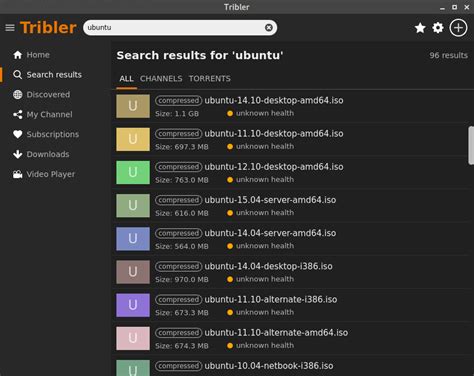
One of the most immediate differences a user notices upon launching Tribler is the search bar. In traditional setups, you go to a website, find a magnet link, and open it with your client. Tribler allows you to search for content directly within the application. This isn't just a convenience feature; it is a fundamental shift in how metadata is handled. The search results are pooled from other Tribler users via a gossiping protocol. When you search for a file, your client asks its immediate neighbors, who ask their neighbors, effectively creating a distributed database of available content. This eliminates the need for a web-based index, making the process of finding content much harder for external entities to monitor or block.
The Onion Routing Layer
The standout feature of Tribler is its integrated anonymity layer. Most privacy-conscious users today pair their torrenting with a Virtual Private Network (VPN). Tribler attempts to make the VPN redundant by implementing its own version of onion routing. When enabled, your traffic is wrapped in multiple layers of encryption and bounced through several other Tribler nodes before reaching its destination. This masking of the IP address is designed to protect the user's identity from both other peers in the swarm and from outside observers. However, as we will discuss in the analysis section, this level of security comes with a significant trade-off in performance.
The Token Economy and GigaChannel System
To encourage healthy participation in the network, Tribler introduces a concept of "GigaChannels." These are essentially decentralized "YouTube channels" or "playlists" where users can curate content. The reputation system is managed by tokens, which are earned through seeding and spent by downloading. This internal economy is designed to mitigate the "free-rider" problem common in P2P networks, ensuring that those who contribute to the network's health are prioritized. For the buyer looking for a reliable stream of content, this curation system provides a layer of quality control that is often missing in the wild West of public trackers.
Detailed Performance Analysis
When we move from theory to practice, the "Don't Buy" (or rather, "Don't Adopt") warnings start to become clearer for certain types of users. Analyzing the performance of Tribler requires looking at it through the lens of a daily driver electronics tool.
Find top-rated Electronics products at great prices.
View Offers →Variable Speed and the Anonymity Tax
The onion routing used by Tribler is technically impressive but practically demanding. In a standard P2P environment, your download speed is limited only by your bandwidth and the number of seeders. In Tribler’s anonymous mode, your data might be hopping through three or four different users' home connections across the globe. The speed of your download then becomes gated by the slowest link in that chain. During our testing and observation of community data, users frequently report speeds that are a mere fraction of their total available bandwidth. If you are used to gigabit speeds on a dedicated VPN, Tribler’s anonymous transfers can feel like stepping back into the era of dial-up or early DSL.
Resource Consumption
From a hardware perspective, Tribler is a heavyweight. Because your machine isn't just downloading a file but also acting as a relay for other people's encrypted traffic and maintaining a decentralized search index, the CPU and RAM usage are significantly higher than that of lightweight clients. For users running older electronics or laptops with limited thermal management, the overhead of running a full Tribler node can be noticeable. It is not uncommon to see the software consuming several gigabytes of RAM during active sessions as it manages the DHT (Distributed Hash Table) and routing tunnels.
Stability and the Beta Feel
Because it is a research project, Tribler often feels like it is in a perpetual state of beta testing. The user interface, while modern and clean, occasionally suffers from responsiveness issues. The search function can take several minutes to "warm up" as the client discovers neighbors. For a consumer who wants the polished, lightning-fast experience of a commercial application, these quirks may prove frustrating. It requires a level of patience and a willingness to understand the underlying mechanics that isn't required by competing platforms.
Comparison of Digital Privacy Solutions
To help you decide where Tribler fits in your setup, we have compared it against the standard "Modern Privacy Setup" which usually consists of a standard BitTorrent client paired with a high-quality paid VPN.
| Feature | Tribler (Hidden Mode) | Standard Client + VPN | Standard Client (No VPN) |
|---|---|---|---|
| Identity Protection | High (Multi-hop Encryption) | Medium/High (Single-hop) | None (IP is Public) |
| Download Speed | Slow (Relay Dependent) | Fast (Limited by VPN) | Maximum (Native Speed) |
| Search Privacy | Decentralized (Integrated) | Centralized (Browser-based) | Centralized (Browser-based) |
| Resource Intensity | Heavy (CPU/RAM Intensive) | Light | Very Light |
| Setup Complexity | Low (All-in-one) | Medium (Requires Subscription) | Low |
| Cost | Free / Open Source | Monthly Subscription Fee | Free |
Pros and Cons: The Reality Check
Every piece of complex technology has its strengths and weaknesses. For Tribler, these are often two sides of the same coin.
- Pro: True Decentralization. Unlike other clients, Tribler can function even if major search engines and trackers are blocked or seized. It is arguably the most resilient P2P tool available today.
- Pro: No-Log Privacy by Design. Since there is no central server, there is no one to keep logs of your activity. Your privacy is enforced by the architecture of the network itself, rather than a corporate promise.
- Con: Significant Speed Reduction. The "anonymity tax" is real. If you need to download large files quickly, the onion routing path will likely prove too slow for your needs.
- Con: Hardware Demand. This is not a "background task" app for low-end hardware. It requires a modern CPU and plenty of RAM to function effectively as a network node.
- Con: Smaller Peer Pool for Anonymity. Your anonymity relies on other Tribler users acting as relays. If the number of active users is low, the efficiency and security of the onion routing layer are naturally diminished.
Buying Guide: Is Tribler Right for You?
Since Tribler is free, the "cost" is actually your time and your system resources. Before you decide to make it your primary tool, consider these real-world use cases and requirements.
You Should Use Tribler If:
You are a privacy hardliner who doesn't trust commercial VPN providers. If your philosophy is that any centralized entity—even one promising "no logs"—is a potential vulnerability, Tribler is the answer. It is also an excellent tool for researchers, activists, or individuals living in regions with extreme internet censorship where accessing standard trackers is impossible. Furthermore, if you value the "set it and forget it" nature of having search and privacy built into one app, Tribler offers a unique convenience despite its speed limitations.
Shop the latest Electronics picks on Amazon.
Browse Now →You Should Stick to Standard Clients If:
You are a "speed-first" user. If you have a high-speed fiber connection and you want to see those download meters maxed out, a standard client with a reputable VPN is far more efficient. Similarly, if you are using an older desktop or a budget laptop as a media server, the high resource consumption of Tribler may lead to system instability or overheating. Finally, if you rely on very specific, private trackers that require a high "ratio" (upload vs. download), Tribler’s anonymous routing may interfere with the tracker's ability to accurately record your statistics.
The Hardware Requirements
To have a smooth experience with Tribler, we recommend using a machine with at least 8GB of RAM and a quad-core processor. Because the client maintains many simultaneous connections to facilitate the routing of other people's data, an SSD is also highly recommended to handle the frequent small read/write operations associated with the decentralized database and metadata caching.
The Evolution of the Software
It is important to note that Tribler is constantly evolving. The team at Delft University frequently updates the software to address bugs and implement new cryptographic research. Recent versions have focused on improving the "Token Economy" to better reward users who seed. This means that an analysis of Tribler from two years ago is likely outdated today. The software is moving toward a future where it might even facilitate decentralized streaming, potentially challenging the way we think about content delivery entirely. However, these features are still in their infancy and should be approached with realistic expectations.
Practical Tips for Potential Adopters
If you decide to give Tribler a try, keep these three tips in mind to maximize your experience. First, be patient with the initial startup phase; allow the client five to ten minutes to fully integrate into the DHT and find high-quality neighbors. Second, experiment with the "hops" settings. While three hops provide the maximum anonymity, reducing it to one hop (if you are comfortable with the trade-off) can significantly increase your download speeds. Third, participate in the community channels. By subscribing to reputable GigaChannels, you can find high-quality content without having to filter through irrelevant search results, making the decentralized nature of the tool much more effective.
Conclusion
The Tribler client is a fascinating piece of electronics engineering that pushes the boundaries of what P2P technology can achieve. It offers a level of resilience and anonymity that is simply unmatched by commercial, centralized alternatives. For the user who values digital sovereignty above all else, it is a revolutionary tool that deserves a spot on their hard drive. However, it is not a silver bullet. The trade-offs in speed, the high demand on system hardware, and the steep learning curve for those used to conventional torrenting cannot be ignored. Before you commit to Tribler, you must decide if you are willing to pay the "anonymity tax." If you are, you will find a robust, academically-backed platform that stands as a testament to the power of decentralized networking. If speed and simplicity are your primary goals, you may find that a more traditional setup serves your needs better in the long run.
Find Your Perfect Electronics on Amazon
Shop a wide range of options with fast shipping and great prices.
See Deals on Amazon →