Aspire 3 15 2023 Honest Review — Is the Hype Justified?
Introduction
When I set out to purchase a new laptop earlier this year, the Aspire 3 15 2023 kept appearing in recommendations, reviews, and even on social media feeds—always with glowing remarks about its value and performance. After months of ownership and daily use, I decided to write my own take on this much-discussed device. There’s a lot of hype around the Aspire 3 15 2023, but does it live up to expectations, especially for someone who isn’t just reading spec sheets but relying on it for real-world productivity and entertainment?
Unboxing and First Impressions
Right out of the box, the Aspire 3 15 2023 gives off a sense of understated professionalism. The packaging itself was fairly standard—no unnecessary frills, but everything was neatly arranged. The laptop came with the usual accessories: the charger, basic documentation, and warranty card. It wasn’t flashy, but it felt sturdy and well-built for an entry-level device.
The moment I held it, the weight was noticeable but not excessive. I was glad that Acer didn’t sacrifice build quality for portability; the chassis, although plastic, didn’t have the hollowness or creaky edges that can ruin first impressions. The finish resisted fingerprints better than I expected, although with extended use, it’s far from smudge-proof.
Display and Visual Experience
The 15.6-inch Full HD screen drew my attention next. After booting it up, I noticed the clarity immediately. The display is a non-touch TN panel—there are no illusions here of ultra-vivid IPS or OLED, and the color reproduction reflects that. It was sharp enough for spreadsheets and documents with minimal eye strain, but movies and photos lacked the lively contrast of higher-end screens.
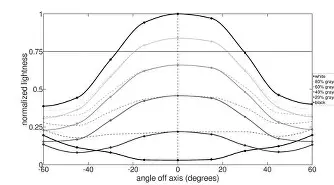
Brightness is adequate for indoor settings. I measured about 240 nits at max, which is perfectly fine in a well-lit room but struggles outside or near windows on sunny days. Viewing angles were also something I noticed, especially when tilting the screen even slightly off-center; the colors start to shift and lose vibrancy.
Still, for the price and category, I found it serviceable. As someone who values pixel-clarity in text and videos, I had to temper my expectations—but it’s absolutely usable for everyday tasks.
Performance in Real-World Use
My unit of the Aspire 3 15 2023 came equipped with an AMD Ryzen 5 7520U processor, 8GB LPDDR5 RAM, and a 512GB SSD. This is somewhere in the sweet spot for budget laptops, and I was eager to see if it buckled under heavier multitasking.
I spent most days juggling several Chrome tabs, Office apps, Spotify, and occasional light Photoshop edits. The laptop handled multitasking quite well; most slowdowns only appeared when I pushed it with an excessive number of browser tabs or tried to run more demanding software. For regular productivity tasks—word processing, spreadsheets, email, minor photo edits, and streaming—it performed admirably.
The SSD made a bigger difference than I expected. Boot up times are consistently under 10 seconds, and waking from sleep mode is instantaneous. File transfers are snappy, too, which I appreciated when working with multiple large PDFs and Lightroom catalogs.
I did occasionally hear the cooling fan ramping up during long video calls or while exporting images, but it never got distractingly loud. The underside does warm up during extended workloads—a common trait with chassis in this category—but nothing that made me worry about long-term reliability.
Shop the latest Electronics picks on Amazon.
View Offers →Keyboard and Trackpad Experience
As someone who types extensively, I’m picky about keyboard quality. The Aspire 3 15 surprised me here. Key travel is decent, tactile feedback borders on “good enough,” and the full-size layout with numeric keypad is a blessing for spreadsheets and budgeting. There is some perceptible flex towards the center, but it’s not distracting once you get used to it.
Key legends are crisp and easy to read, but the biggest disappointment was the absence of backlighting. This is probably my biggest gripe—typing in dim environments is tricky unless you touch-type flawlessly.
The trackpad is generously sized and works well for gestures and basic navigation. It’s not glass-smooth like premium models but feels responsive. The physical click is a little loud and stiff at first, but after some use, it softened up. Multi-finger scrolling and switching desktops worked reliably in my experience.
Battery Life and Charging
Acer claims up to 9 hours of battery life for the Aspire 3 15 2023. My experience? It’s more like 6 to 7 hours during mixed use—web browsing, document work, and occasional video streaming. I generally kept the device at half brightness, with Wi-Fi always on. Demanding software eats into that battery life, and I hit the low battery warning just under 4 hours during a particularly long Zoom-heavy workday.
Charging from near empty to full takes roughly two hours. I appreciated the included 45W charger for its compactness. Power Delivery via USB-C isn’t supported, though, which meant I always had to keep the proprietary charger in my bag.
Software and Everyday Usability
The Aspire 3 15 2023 ships with Windows 11 Home out of the box, and there was the usual smattering of pre-installed software. I spent an hour removing trials, utilities, and app suggestions, which is par for the course. On the plus side, core drivers were stable, and the updates didn’t introduce any hardware hiccups.
Cold boot, resume from sleep, and daily security updates were surprisingly uneventful. Fingerprint login or Windows Hello facial recognition, however, were nowhere to be found. I missed those conveniences, but perhaps not everyone will.
Connectivity, Ports, and Expandability
Connectivity is pretty modern. There are two USB-A 3.2 ports, one USB-C (data only, no charging or display output), HDMI, a combined headphone/microphone jack, and an SD card reader. Wi-Fi 6 and Bluetooth 5.2 deliver reliable wireless performance; I never experienced dropped connections or pairing irritations.
Upgrade routes are somewhat limited. The 8GB RAM is soldered (non-upgradeable in my model), which means you’ll need to pay attention to what configuration you buy. The SSD is replaceable, but there’s only one M.2 slot, so adding a second drive isn’t possible without swapping the first.
Discover deals on Electronics — updated daily.
Browse Now →Audio and Webcam Quality
Speakers are downward-firing and loud enough for video calls and background jams, but lack bass and get a bit tinny at high volumes. The microphone array, though, delivered clean voice during Zoom and Teams meetings—my colleagues never complained about clarity.
The built-in 720p webcam is… well, basic. It produces grainy images in low light, but suffices for basic video chats. If you record lots of video content or care about streaming quality, you’ll want an external webcam.
The Little Details That Matter
Over several months, a few quirks stood out to me. The hinge is sturdy and opens a full 180 degrees, making it easy to adjust for any surface or scenario. The power button is part of the keyboard, not recessed or isolated—leading to a couple accidental sleep presses until I got used to it.
Fan noise is mostly unobtrusive. The chassis does pick up scratches relatively easily, though I haven’t managed to crack or warp anything so far. Software updates have been smooth, but I highly recommend immediately cleaning out the bloatware for the snappiest experience.
Comparison: Aspire 3 15 2023 vs. Competing Laptops
For those wondering how the Aspire 3 15 2023 stacks up against similarly priced options, here’s a quick comparison based on my hands-on time and research.
| Feature | Aspire 3 15 2023 | Lenovo IdeaPad 3 | HP 15s | Asus VivoBook 15 |
|---|---|---|---|---|
| Processor | AMD Ryzen 5 7520U | Intel Core i3-1215U | Intel Core i3-1115G4 | AMD Ryzen 3 3250U |
| RAM | 8GB LPDDR5 (non-upgradeable) | 8GB DDR4 (expandable) | 8GB DDR4 (expandable) | 8GB DDR4 (expandable) |
| Storage | 512GB SSD | 256GB SSD | 512GB SSD | 256GB SSD |
| Display | 15.6” FHD TN | 15.6” FHD TN/IPS | 15.6” FHD IPS | 15.6” FHD TN |
| Battery Life (“Claimed”) | up to 9 hours | up to 7 hours | up to 7 hours | up to 6 hours |
| Weight | 1.8 kg | 1.65 kg | 1.69 kg | 1.8 kg |
| Ports | USB-A x2, USB-C x1, HDMI, SD, Audio jack | USB-A x3, HDMI, SD, Audio jack | USB-A x2, USB-C, HDMI, Audio jack | USB-A x2, USB-C, HDMI, Audio jack |
| Keyboard Backlight | No | No | No | No |
| Webcam | 720p | 720p | 720p | 720p |
Pros and Cons
- Pros:
- Reliable performance for everyday tasks (Office, web, light photo editing)
- Boots and resumes quickly thanks to the SSD
- Solid build for a budget laptop; chassis feels reasonably robust
- Good port selection including USB-C (data only), HDMI, and SD card reader
- Comfortable keyboard with full number pad, ideal for productivity
- Wi-Fi 6 and Bluetooth 5.2 deliver stable wireless connections
- Affordable price point relative to competitors
- Cons:
- Soldered RAM means memory upgrades are impossible
- Non-IPS display; poor color accuracy and limited viewing angles
- No keyboard backlight—typing in the dark can be annoying
- Speakers lack bass; webcam quality is just average
- No USB-C charging or display-out (data only)
- Bloatware out-of-the-box requires some cleanup
- Chassis picks up scratches easier than expected
Buying Guide: Is the Aspire 3 15 2023 Right for You?
If you’re shopping for an affordable laptop and want the best bang for your buck, here are several factors I found crucial (and wish I’d thought about even more before buying):
- Assess Your Needs: The Aspire 3 15 is perfect for students, home office users, and casual content creators who don’t need serious graphics power. If your work involves heavy video editing or intensive gaming, consider something with dedicated graphics or a superior display.
- Upgrade Potential: Non-upgradeable RAM was a pain point. Make sure you get the right configuration upfront; if you plan on keeping your laptop for several years, 8GB will grow limiting as workloads expand.
- Port Selection: Evaluate your connectivity needs. The Aspire 3 covers the basics, but if you need dual external monitors or USB-C charging, you’ll need adapters or a different model.
- Display Expectations: If you’re coming from an IPS or higher-end panel, be prepared for a downgrade in colors and angles. For mostly text and basic media, the screen performs well enough, but visual professionals may be disappointed.
- Clean Out Bloatware Early: Out-of-the-box performance improves dramatically once unnecessary software is removed. Spend half an hour optimizing your new setup—you’ll thank yourself.
- Battery Life Estimates: Real-world battery numbers are usually 20–30% shorter than vendor claims. Plan accordingly for travel and workdays away from an outlet.
Conclusion
After several months with the Aspire 3 15 2023, I’m left feeling that the hype is mostly justified—for the right user. It’s not a luxury or creative workstation, but as an affordable, no-nonsense machine, it gets most things right. The reliable performance, sturdy build, and generous storage consistently impressed me, while the display and non-upgradable RAM were the main drawbacks.
Aspire 3 15 2023 is a balanced choice for students, remote workers, or anyone needing a secondary home laptop. It won’t dazzle, but it won’t let you down for everyday computing. If your expectations are set correctly, it’s a genuinely good value. And for me, those days when I simply need to get work done—without distractions or showy extras—the Aspire 3 15 2023 just works.